Industrial Warehouses in Brooklyn
Brooklyn, USAIndustrial · Urban
A music video needing high-ceiling volume, raw texture, and full blackout control.
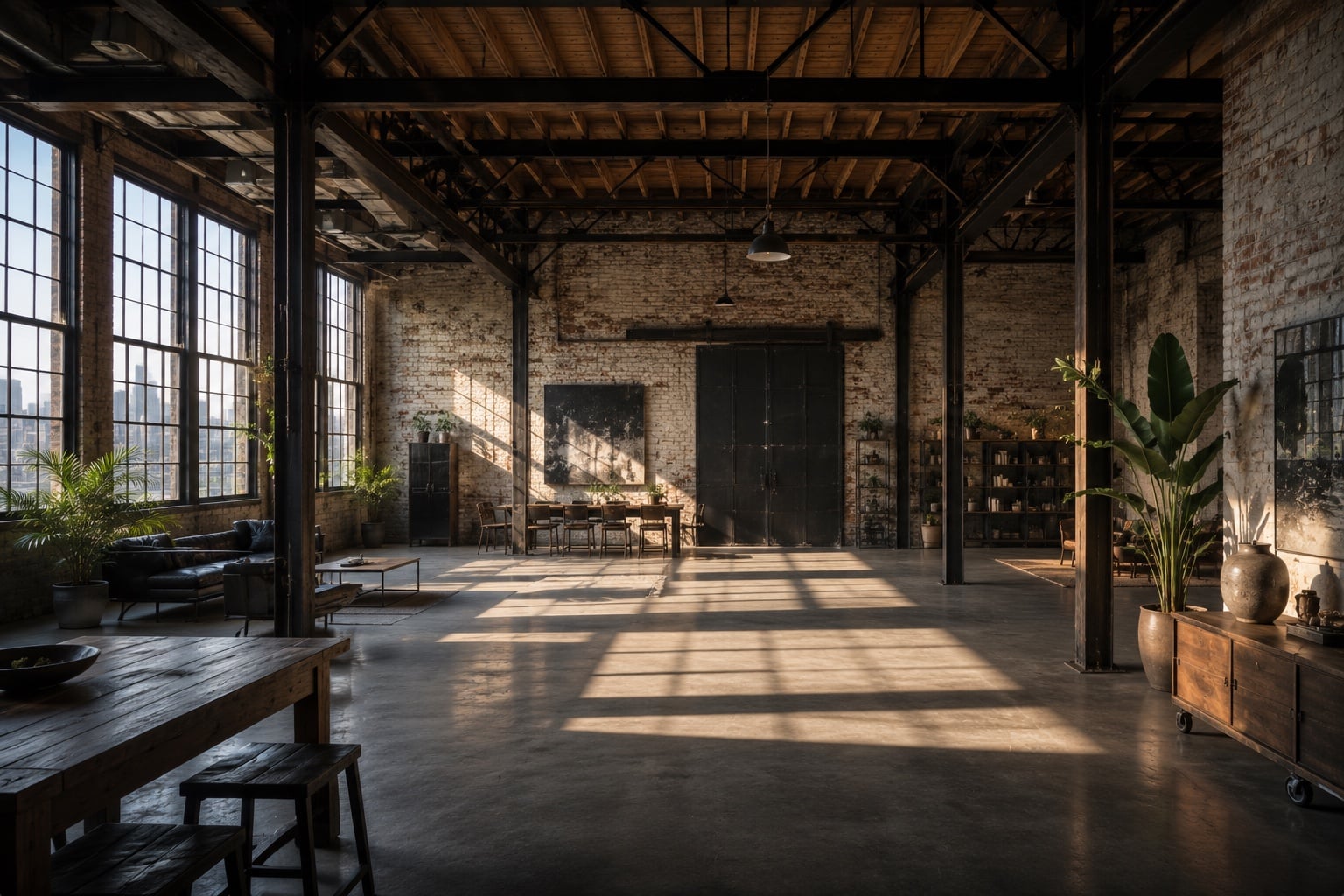
Converted and active warehouses with steel trusses, large bay doors, and open column grids — scouted for ceiling height, power, and filming permissions.
Report overview
Shoot-readiness
Flexible and controllable once power and permission are sorted. Space and texture are the draw; electrical and access need verifying.
Best shooting window
Interior-controlled — any time, with blackout. Midday for natural directional light through bay doors.
Main visual opportunity
High-volume raw space with steel, columns, and full lighting control.
Biggest production risk
Power and permits. Amperage limits and city filming rules can stall a shoot.
Location intelligence
Confidence reflects the strength and consistency of available source evidence. Local rules and access conditions should still be confirmed before production.
Light
High confidenceYou can work with the building’s light or kill it entirely.
- Clerestory and bay-door light is strongly directional at midday.
- Full blackout needs floor-to-ceiling drape — bare windows leak.
- High ceilings let you fly large sources for soft top light.
- Pale walls bounce; raw brick eats light — plan output accordingly.
Camera angles
High confidenceVolume and repetition are the visual language.
- Ceilings of ~15–25 ft suit cranes, jibs, and tall rigs.
- Column grids create rhythm — and dictate which dolly moves work.
- Bay doors frame silhouettes against bright exteriors.
- Mezzanines and catwalks give high-angle coverage.
Access
Medium confidenceHeavy gear makes docks and elevators essential.
- Ground-level loading docks ease heavy carts and rigging.
- Check for a freight elevator if shooting upper floors.
- Confirm door widths and turning room for large cases.
- Floors can be uneven and dusty — sweep and verify load ratings before rigging.
Permits
Verify locallyInteriors are by owner agreement; the street is the city’s — verify and permit.
- City filming generally needs a permit for crew and equipment on the street.
- Interior shoots are by owner/property-manager agreement in writing.
- Active buildings often require proof of insurance (a COI) — confirm needs early.
- Rigging overhead may trigger additional sign-off — verify locally.
Crowds
Medium confidenceActive warehouses aren’t crowds — they’re operations.
- Working warehouses have forklift traffic and noise — shoot off-hours or weekends.
- Vacant/event spaces are cleaner but cost more to light.
- Coordinate with building ops to pause adjacent activity.
- Weekends often give the quietest, most controllable stage.
Weather
High confidenceIndoors and weatherproof — a reliable all-conditions stage.
- Interiors are unaffected by rain — a strong cover set.
- Bay-door “natural light” shots still depend on the sky outside.
- Unheated/uncooled spaces get extreme — plan crew and talent comfort.
- Old roofs leak — check before placing electrics on the floor.
Production checklist
Before you go
- Confirm interior filming terms and any insurance (COI) requirements.
- Pull a city film permit if any crew or gear hits the street.
- Verify available amperage and distro; arrange a generator if short.
- Confirm dock access, freight elevator, and floor load ratings.
On arrival
- Walk the space for power, blackout leaks, and rigging points.
- Sweep and protect floors before staging.
- Set blackout drape before lighting if you need full control.
- Stage heavy gear via the dock — don’t carry.
Backup plan
- Permit issue on the street? Keep coverage fully interior.
- Power short? Fall back to a generator-led lighting plan.
- Noisy neighbors? Shoot MOS and capture clean audio off-hours.
Related examples
Scout a location for your production
Describe the shoot, constraints, and production requirements, and ScoutHalo returns real locations — each with its own production-ready Scout Report.